
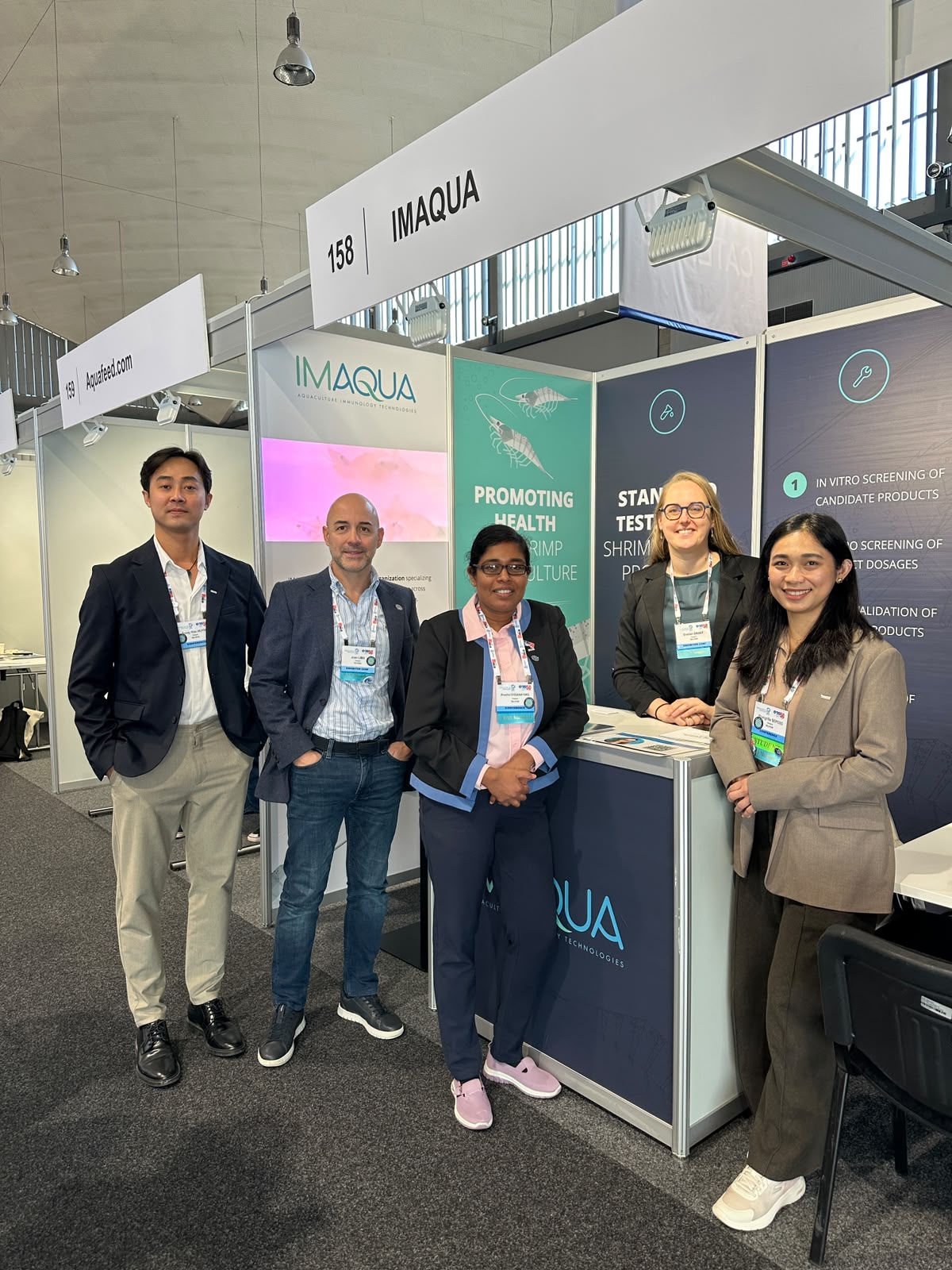
Aquaculture Europe 2026 brought the European aquaculture community together in Ljubljana, Slovenia.
IMAQUA joined the event with a strong focus on shrimp health research, presenting new work on disease challenge models, shrimp immunology and circular aquaculture, while also discussing how dedicated shrimp health research can support the development of European shrimp farming.
This year, IMAQUA was represented by our scientific team through several presentations in the Shrimp & Other Crustaceans session, alongside our presence at Booth 158. The programme provided an opportunity to share our latest research, exchange knowledge with researchers and industry professionals, and discuss current challenges facing shrimp aquaculture.
Experimental challenge models for Enterocytozoon hepatopenaei in shrimp
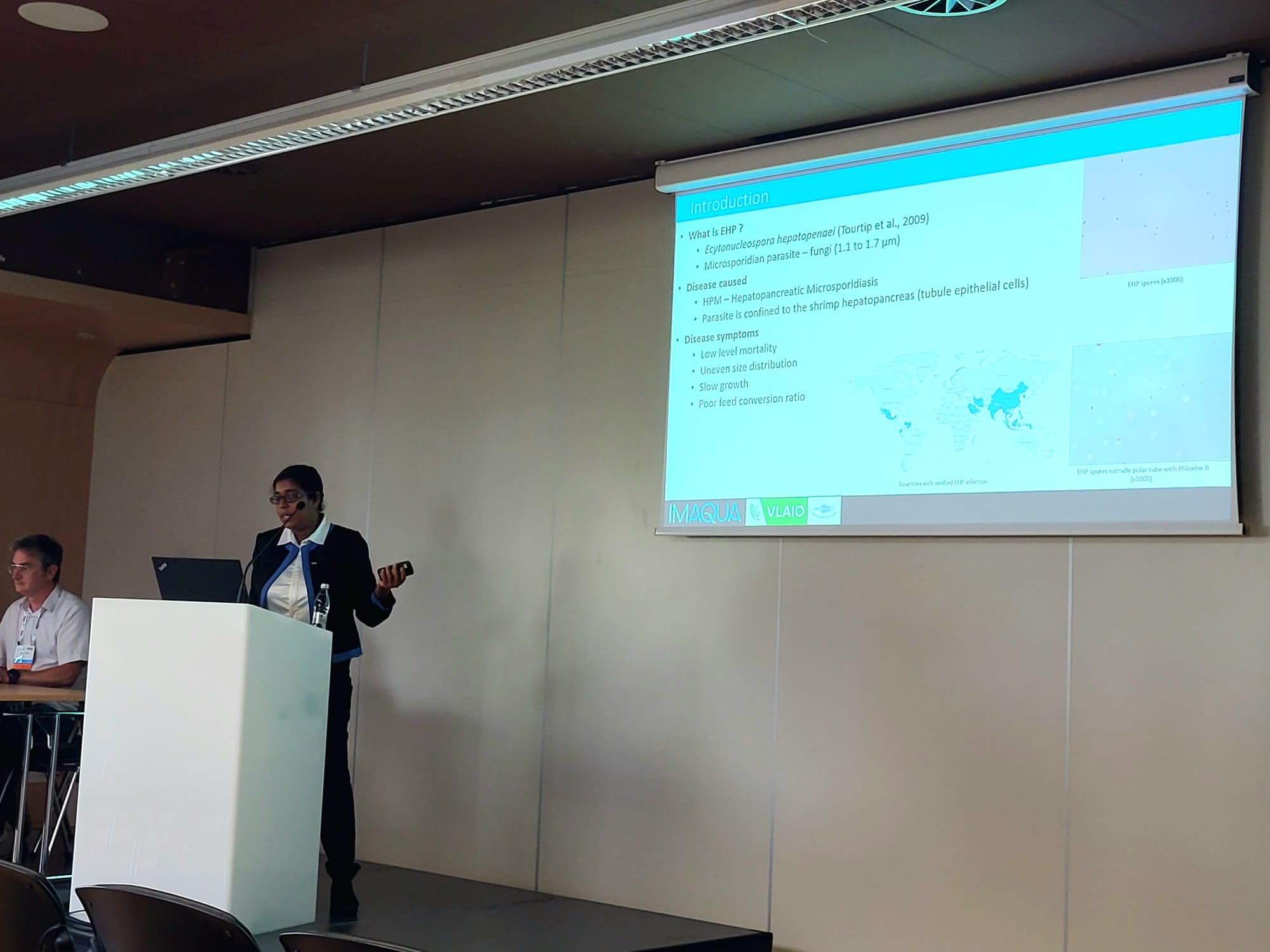
Anusha Dissanayake, PhD candidate and VLAIO Baekeland mandate holder, carrying out her research in collaboration with the Laboratory of Aquaculture & Artemia Reference Center at Ghent University, presented“Experimental Challenge Models for Enterocytozoon hepatopenaei in Shrimp: A Comprehensive Review of Experimental Approaches and Knowledge Gaps.”
Enterocytozoon hepatopenaei (EHP) represents an important challenge for shrimp health research and production. Reliable experimental challenge models are essential for studying the pathogen and for evaluating strategies intended to control its impact.
The presentation reviewed experimental approaches currently used for EHP challenge studies, with particular attention to their applicability, reproducibility and remaining knowledge gaps. Establishing well-characterized and reproducible challenge models is an important step towards generating comparable research results and supporting the development and validation of health interventions for shrimp aquaculture.
Standardizing immunological tools for Penaeus vannamei health assessment
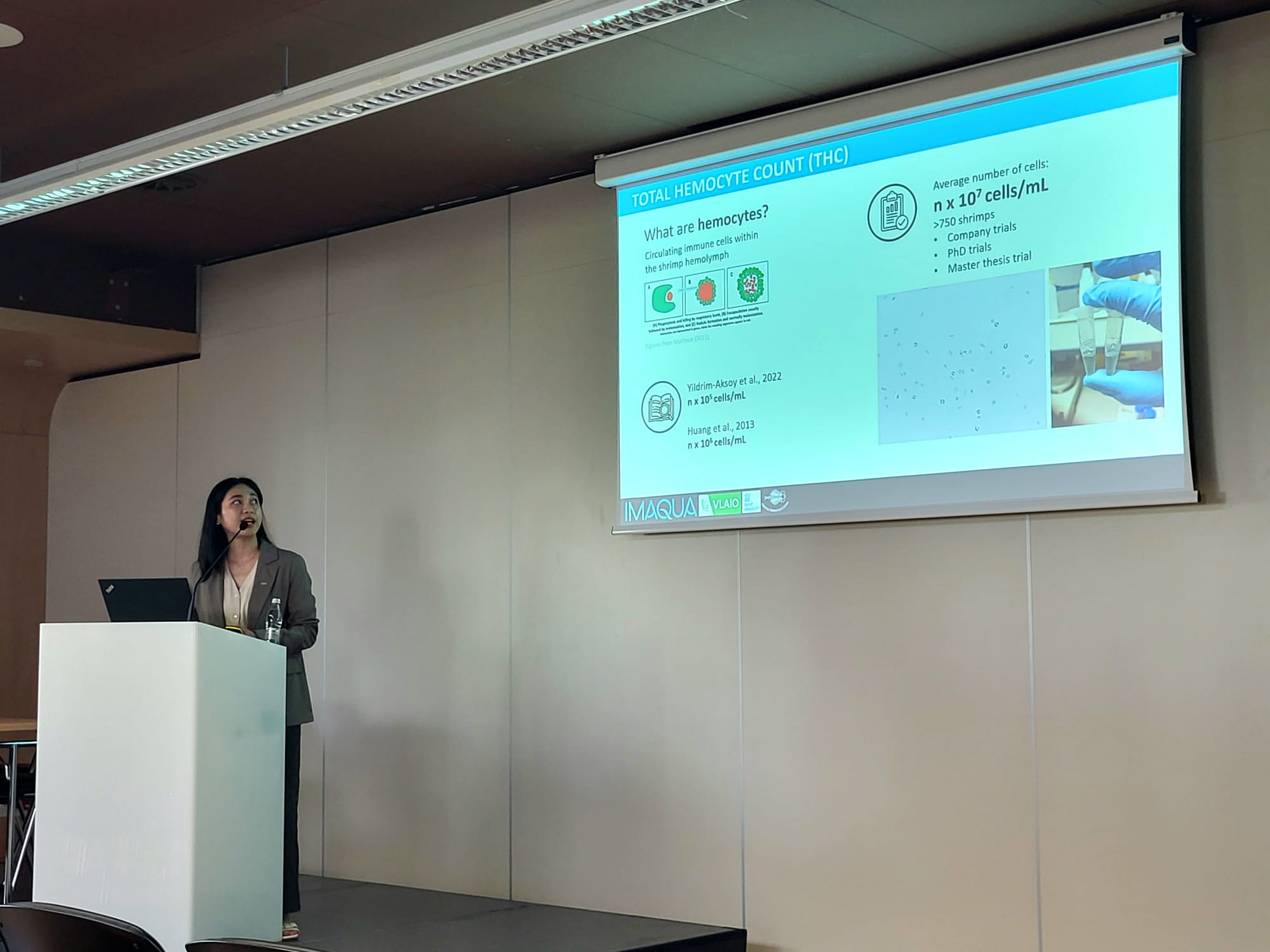
Shangrilla Seposo, PhD candidate and VLAIO Baekeland mandate holder, carrying out her research in collaboration with the Laboratory of Aquaculture & Artemia Reference Center at Ghent University, presented“Standardizing Immunological Tools for Penaeus vannamei Health Assessment.”
Assessing the immune status of shrimp is an important part of understanding how animals respond to pathogens, environmental conditions and health-supporting interventions. However, differences in sampling procedures, laboratory methods and interpretation can make results difficult to compare between studies.
This work focuses on the standardization of immunological tools for Penaeus vannamei, supporting more consistent and reliable assessment of shrimp health. Such standardized approaches can strengthen experimental research and help evaluate the effects of feed ingredients, immunomodulators and other strategies designed to improve shrimp robustness.
Reproducible multifactorial challenge models for White Faeces Disease
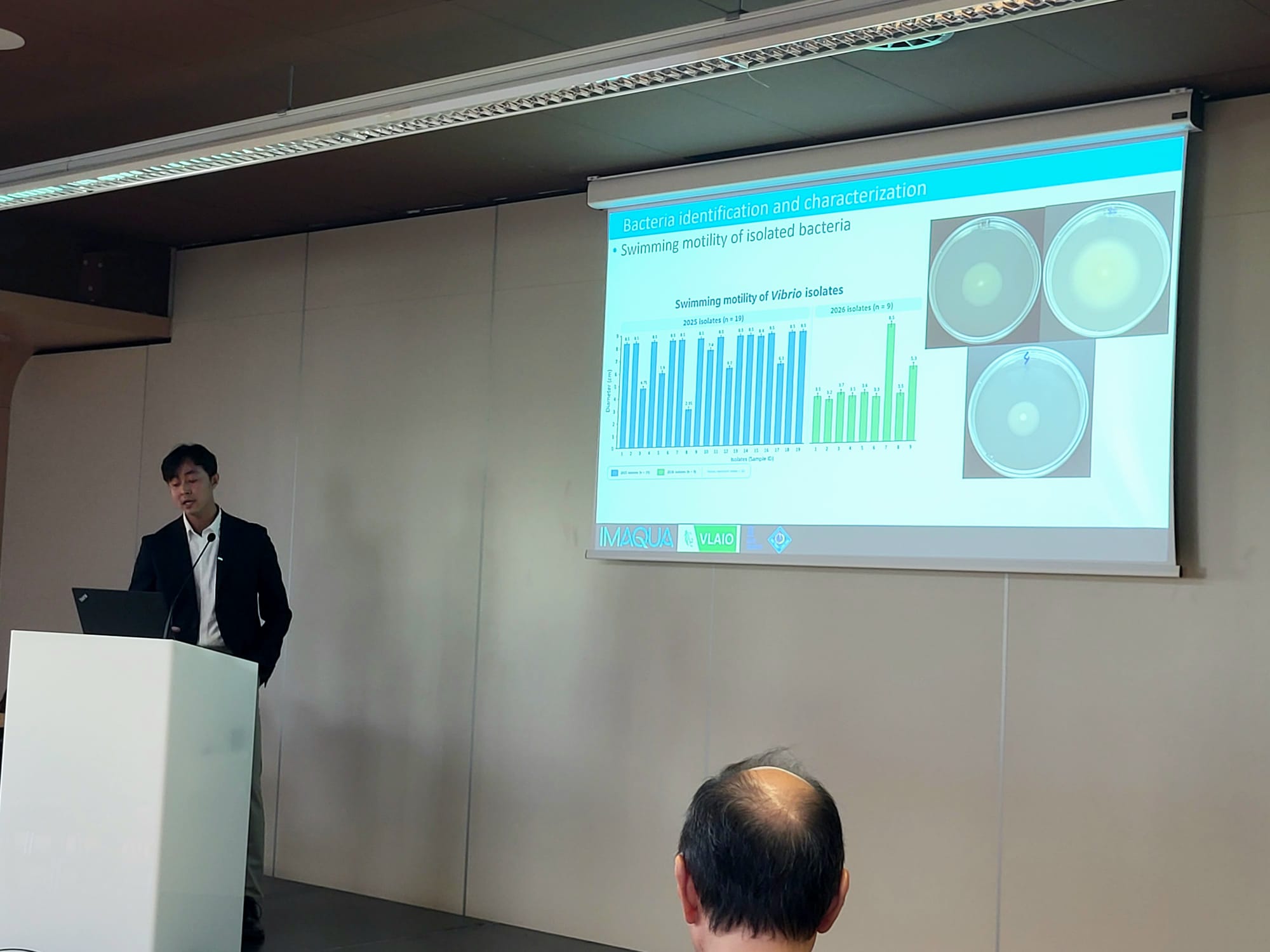
Hieu Trung Huynh, PhD candidate and VLAIO Baekeland mandate holder, carrying out her research in collaboration with the Laboratory of Aquaculture & Artemia Reference Center at Ghent University and Can Tho University, presented “Establishment of Reproducible Multifactorial Challenge Models for White Faeces Disease in Shrimp.”
White Faeces Disease (WFD) represents a complex challenge for shrimp health and production. Its multifactorial nature, involving Enterocytozoon hepatopenaei (EHP) and opportunistic Vibrio spp., makes reliable experimental models essential for better understanding disease development and evaluating potential control strategies.
This work focuses on establishing a reproducible co-infection model using field-derived EHP and Vibrio isolates combined with controlled laboratory infection systems. Developing a well-characterized and reproducible WFD challenge model will support further research into pathogen interactions and provide a robust platform for evaluating health interventions and disease management strategies in shrimp aquaculture.
Towards circular shrimp aquaculture
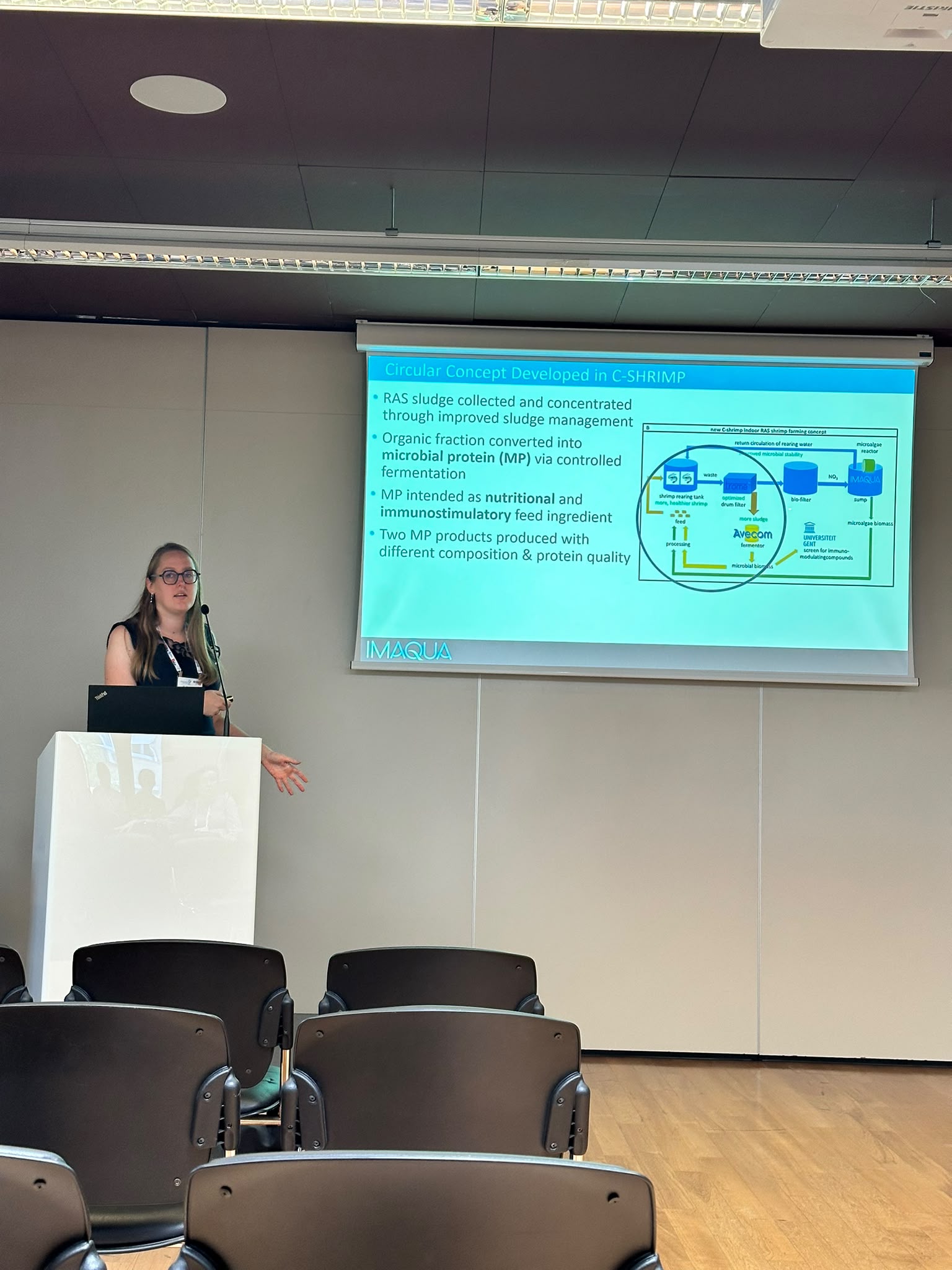
Dr. Evelien De Swaef, Head of R&D at IMAQUA, presented “Towards Circular Shrimp Aquaculture: Sludge Recovery Into Microbial Protein for Improved Performance and Immune Responses in Litopenaeus vannamei.”
The presented results were obtained within a VLAIO-funded research and development (O&O) project, bringing together IMAQUA, Avecom, Trome, Inalve and Ghent University, with support from VLAIO and the European Union.
The presentation explored an approach to circular shrimp aquaculture in which nutrients present in aquaculture sludge are recovered and transformed into microbial protein. Instead of treating these nutrients solely as waste, their recovery could contribute to more resource-efficient production while creating a potentially valuable input for aquaculture.
The research investigates the use of this microbial protein in L. vannamei, with particular attention to shrimp performance and immune responses. The work connects circular resource use with shrimp nutrition and health, contributing to the broader development of more sustainable aquaculture production systems.
Integrating shrimp health research into European shrimp farming
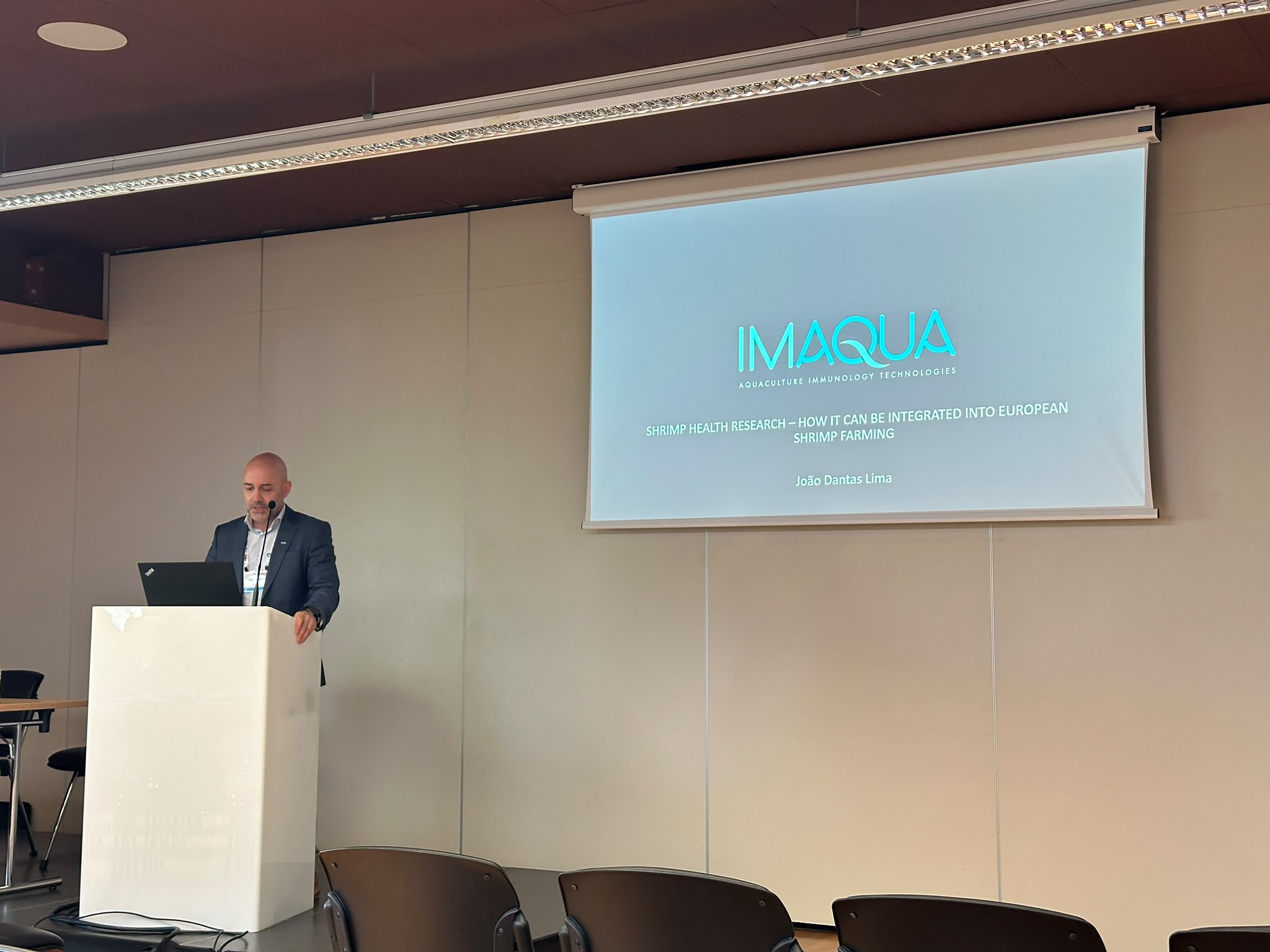
João Lima, Managing Director of IMAQUA, presented “Shrimp Health Research: How It Can Be Integrated Into European Shrimp Farming” on September 29.
As European shrimp farming develops, dedicated health research can play an important role in supporting production under European farming conditions. João’s presentation focused on how shrimp health expertise, experimental disease models and applied research can be integrated into the development of the European shrimp farming sector.
IMAQUA’s experience with in vivo and in vitro testing models and tailored research solutions provides tools for investigating shrimp diseases, evaluating health interventions and supporting product development. Connecting these research capabilities with the needs of European producers can help bridge the gap between laboratory research and practical applications in shrimp farming.
Connecting science and industry at AE2026
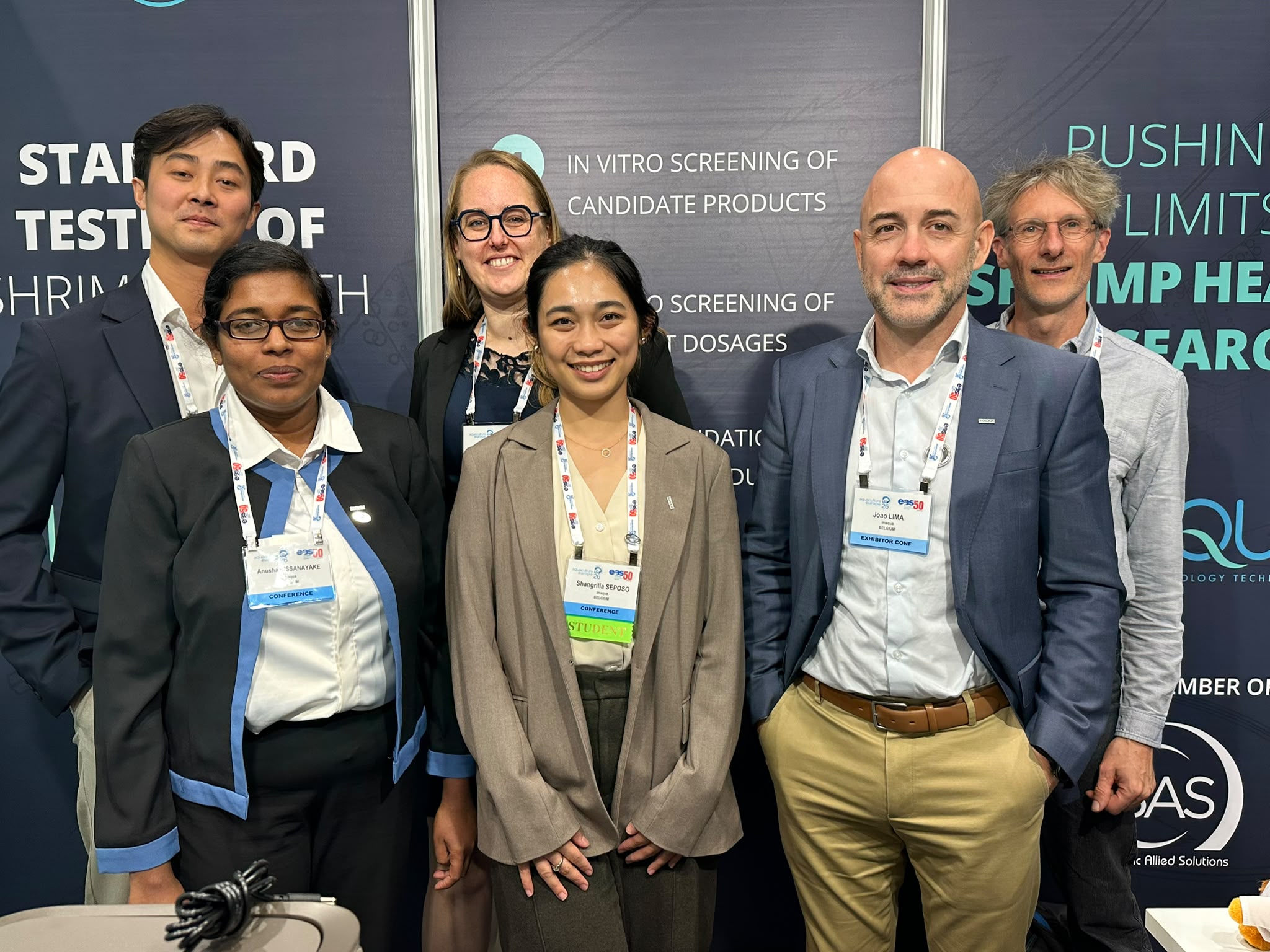
Beyond the scientific programme, Aquaculture Europe 2026 provided an important opportunity for the IMAQUA team to meet researchers, aquaculture producers, feed and health companies, technology providers and other partners from across the sector.
At Booth 158, we discussed shrimp health research, challenge models, immunology services and tailored R&D approaches with visitors throughout the event.
We would like to thank everyone who attended our presentations, visited our booth and shared their ideas and experiences with us in Ljubljana. The discussions at Aquaculture Europe 2026 highlighted the value of connecting robust scientific models with the practical challenges faced by a growing and increasingly innovative shrimp aquaculture industry.
We look forward to continuing these conversations and contributing to healthier, more sustainable and scientifically supported shrimp farming in Europe and beyond.
Looking for a research partner in shrimp health?
Whether you are developing a new feed additive, health product, or aquaculture solution, IMAQUA can support your R&D with tailored in vivo and in vitro models, shrimp health expertise, and customized research solutions.
Have a project in mind? Get in touch with our team to discuss how we can support your research.
Contact Our Team